Open a front-load washer in Statesville after a humid week and you may get greeted by a smell best described as a swamp in a gym bag. That funk has specific causes: mold and mildew growing on the rubber door gasket, detergent and fabric softener residue feeding it, and a door that stays shut between loads, sealing in warm, wet air. None of it means the washer is ruined. All of it is fixable with a routine.
Timing matters in the Piedmont. Summer humidity is when gasket mold blooms, pollen season loads the machine with gritty clothes, and winter is when the habit either holds or slips. Work the seasons and the smell stays gone instead of returning every August.
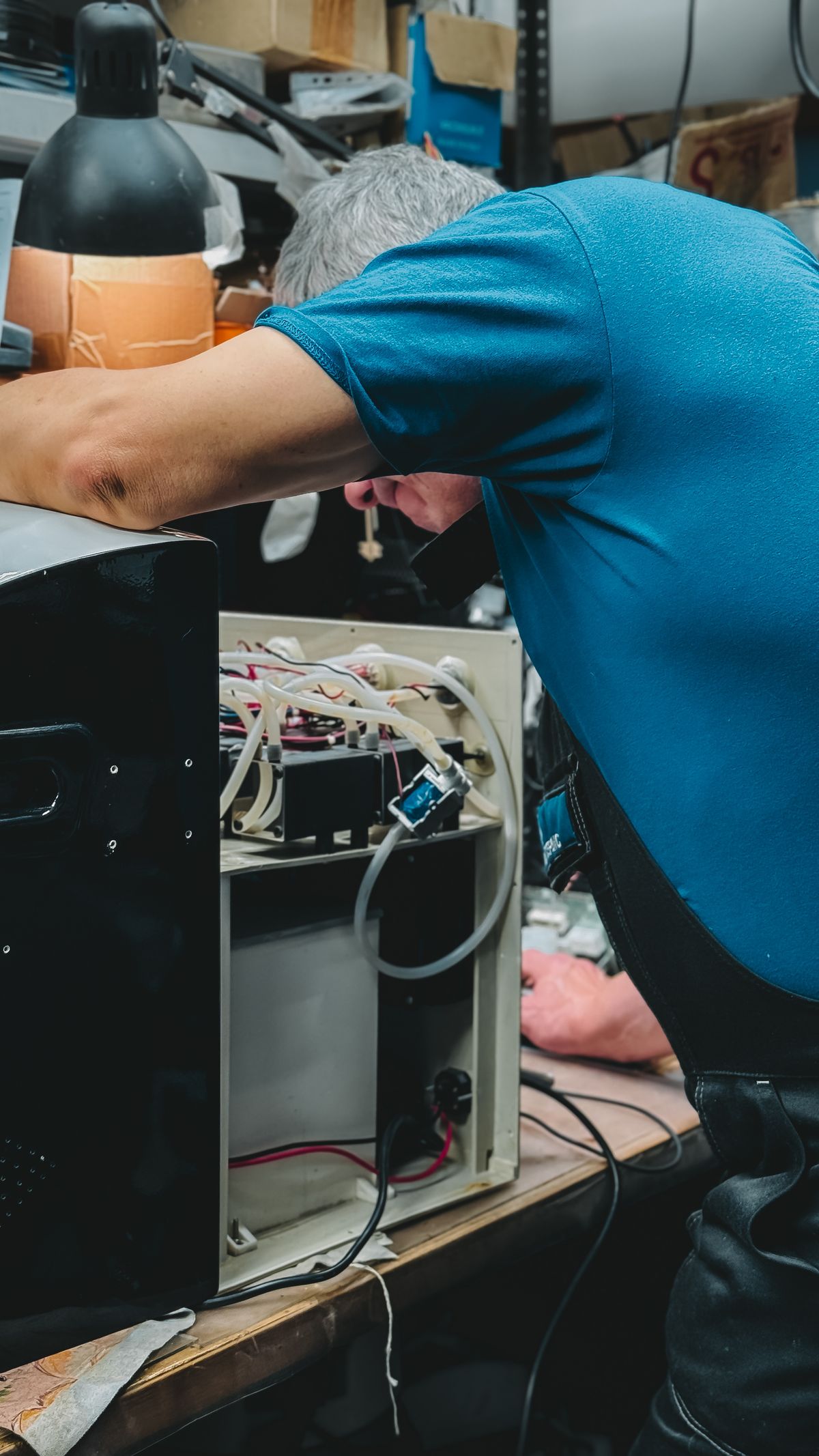
The front-load freshness checklist
- Leave the washer door ajar between loads so the gasket and drum dry out.
- Wipe the gasket folds after the last load of the day; water and lint collect in the bottom fold.
- Pull the detergent drawer out to dry, since residue and mold grow there too.
- Use the amount of detergent the machine calls for, often far less than the cap suggests.
- Run a hot cleaning cycle monthly, with a washer cleaner or as the manual directs.
- Remove finished loads promptly instead of letting wet clothes sit overnight.
- Check and clean the drain pump filter on the schedule the manual gives.
Why front-loaders get funky and top-loaders mostly do not
A front-loader seals watertight with a large rubber bellows gasket, and that gasket has folds that hold a little water after every cycle. Add the modern habit of cold-water washing, which is good practice for clothes and energy, and the machine rarely gets hot enough, long enough, to discourage mildew on its own. Excess detergent makes it worse: suds that do not rinse away leave a film through the drum and hoses that becomes food for odor-causing growth.
Top-loaders vent through a loose-fitting lid and have no sealed gasket folds, so they dry between loads almost by accident. They can still smell from residue and a neglected tub, but the front-load gasket is the classic case, and it is a design trade for water efficiency, not a defect in your particular machine.
Cleaning a washer that already smells
Start with the gasket: pull the folds back gently and wipe out the dark film with a cloth and a mild cleaner the manual allows, checking for the coins, hair ties, and socks that lodge there. Run the hottest, longest cycle empty, using a washing machine cleaner tablet or the cleaning method in your manual, then wipe the gasket again and leave everything open to dry.
If the smell survives two honest cleaning cycles, the growth may be in the outer tub or hoses beyond what a cycle reaches, or the drain pump filter may be holding a mat of wet lint. That is the point where a service visit makes sense, because disassembly is the remaining step. In Statesville, Fuzzy's Appliances handles that level of washer work, and a machine cleaned back to neutral will stay that way if the door-open habit sticks.

Detergent, softener, and the dispenser
The dispenser deserves its own paragraph because it quietly feeds the whole problem. Liquid detergent and fabric softener leave residue in the drawer and the channels behind it, and in a humid laundry room that residue stays damp between washes. Pull the drawer weekly, rinse it in the sink, and let it dry on a towel before it goes back. If your machine has a powder option for some loads, powdered detergent often leaves less film in the system, though the better rule is simply using less of whichever you choose. High-efficiency machines are built for low suds, and the most common pouring error is filling to a mark meant for older, larger machines. Measure once with actual care and most people find they have been doubling the dose for years, paying for the privilege in smell.
When the smell is in the drain, not the drum
Sometimes the washer is innocent. A laundry room drain or standpipe can vent sewer odor that gathers near the machine and gets blamed on it, especially in summer when the house is closed and air conditioning moves air around. The test is simple: smell the gasket folds directly, then smell near the drain. Gasket odor is sour and close; drain odor is a different, sewer note and will be present with the washer off and dry. Drain problems are plumbing, not appliance work, and separating the two saves a service call aimed at the wrong machine.
Common questions
Is the leave-the-door-open rule really necessary?
Yes, for front-loaders it is the single most effective habit. A sealed, wet drum is exactly the environment mildew wants, and an ajar door lets it dry between loads.
Can too much detergent cause the smell?
Yes. Excess detergent leaves residue through the drum and hoses that feeds odor-causing growth, and high-efficiency machines need less detergent than most people pour.
How often should I run a cleaning cycle?
Monthly is the common manufacturer guidance, more often in humid summer months or with heavy use. Pair it with a gasket wipe for the full effect.
Photos in this guide are representative stock images.
← All guides from Fuzzy's Appliances← Back to Fuzzy's Appliances