Every broken appliance in Statesville eventually asks the same question: fix this one, or put the money toward a new one? The honest answer is rarely about a single repair. It is about the age of the machine, how many times it has failed before, and whether the part it needs still exists. That combination is sometimes called the age-and-again rule, and it is a better guide than any single threshold.
This is a decision guide, not a sales pitch for either answer. Repair shops, including the one hosting this page, make money repairing, and stores make money selling. Your interest is the machine that gives you the most working years for the effort, and the table below is organized around that.
| Situation | Lean repair | Lean replace | Why |
|---|---|---|---|
| First failure, machine under half its typical life | Yes | A single wear part failing early in life is normal, not a pattern | |
| Second major failure within a year | Yes | Repeat failures signal systems wearing out together, not bad luck | |
| Control board failed on an older model | Often | Boards are among the costliest parts and may be discontinued | |
| Sealed system failure on a refrigerator | Only on a young unit | Usually | Compressor work is the deepest repair a fridge can need |
| Simple part: belt, igniter, pump, switch | Yes | These are wear items designed to be replaced | |
| Parts no longer available | Yes, by necessity | No part means no repair, whatever the machine's condition |
Typical lifespans, used carefully
General lifespan ranges are widely published: refrigerators commonly run about 10 to 18 years, washers around 10 to 14, dryers around 10 to 13, dishwashers around 9 to 13, and ovens and ranges often 15 years or more. Treat those as context, not expiration dates. A lightly used range in a small household and a washer doing daily loads for a family of six age at completely different rates.
Where a machine sits in its range still helps frame the decision. A repair that returns a young machine to full health buys many expected years. The same repair on a machine past its range buys an unknown, and the next failure is statistically closer than the last one was. That is the age half of the rule.
The again half: patterns beat incidents
One failure is an incident. Two unrelated failures in a short span are a pattern, and patterns change the math because appliances wear as systems: a washer whose pump went this spring and whose board flickers by fall is telling you its parts are aging out together. Keep a simple record on the machine itself, a note with dates and what was done, and the pattern becomes visible instead of a feeling.
Part availability is the third factor, and it is not under anyone's control. Manufacturers support models for a limited run of years, and control boards and sealed components disappear first. A technician who tells you a part is discontinued is giving you decision information, not an excuse, and it can usually be verified by the model number. This is also why keeping the model and serial plate readable matters; every parts conversation starts there.
Making the call without regret
Get the diagnosis first, as a separate question from the repair. Knowing it is the pump and that the part is available turns a vague worry into a clean choice. Ask what else on the machine is showing wear, since a technician already inside the unit is the best source on its overall condition. Then decide against your own horizon: a machine you plan to replace at a kitchen remodel next year deserves a different answer than one you need for a decade.
In Statesville, Fuzzy's Appliances works across refrigerators, washers, dryers, ovens, and dishwashers, and the useful conversation is this one, age, pattern, and parts, before anyone orders anything.
One more factor: downtime
How long a repair keeps the machine out of service belongs in the decision too. A part in stock is a day or two without a washer. A discontinued board hunted through suppliers can stretch into weeks, and a household running daily loads will feel that differently than a household of one. Ask for an honest estimate of the wait alongside the diagnosis, and weigh it openly. Sometimes the right call is a modest repair now and a planned replacement later, on your schedule rather than the machine's.
Common questions
What is the 50 percent rule I keep hearing about?
A common rule of thumb says replace when a repair approaches half the value of a comparable new machine on an older unit. It is a rough guide only, and age plus failure history matter more than any single percentage.
Does one repair mean more are coming?
Not necessarily. A single wear part failing on a mid-life machine is normal. Repeat failures close together, especially of different systems, are the pattern that points toward replacement.
How do I find my model number?
Look inside the refrigerator door frame, under a washer lid, inside a dryer door, or on the oven frame behind the door. That number is what determines part availability.
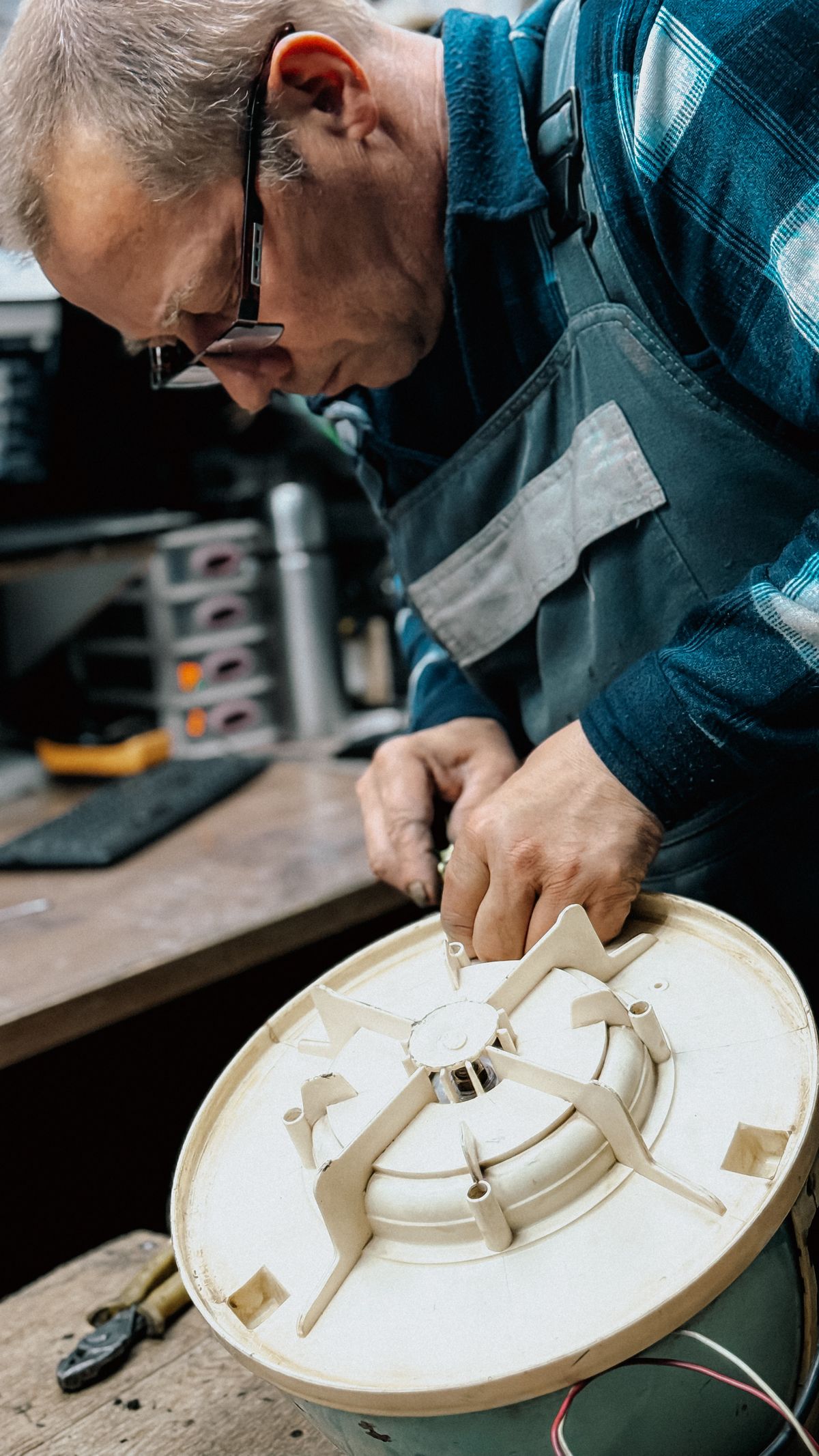
Photos in this guide are representative stock images.
← All guides from Fuzzy's Appliances← Back to Fuzzy's Appliances